One in Three Audit Clients Would Leave for Better Tech and Here’s Why
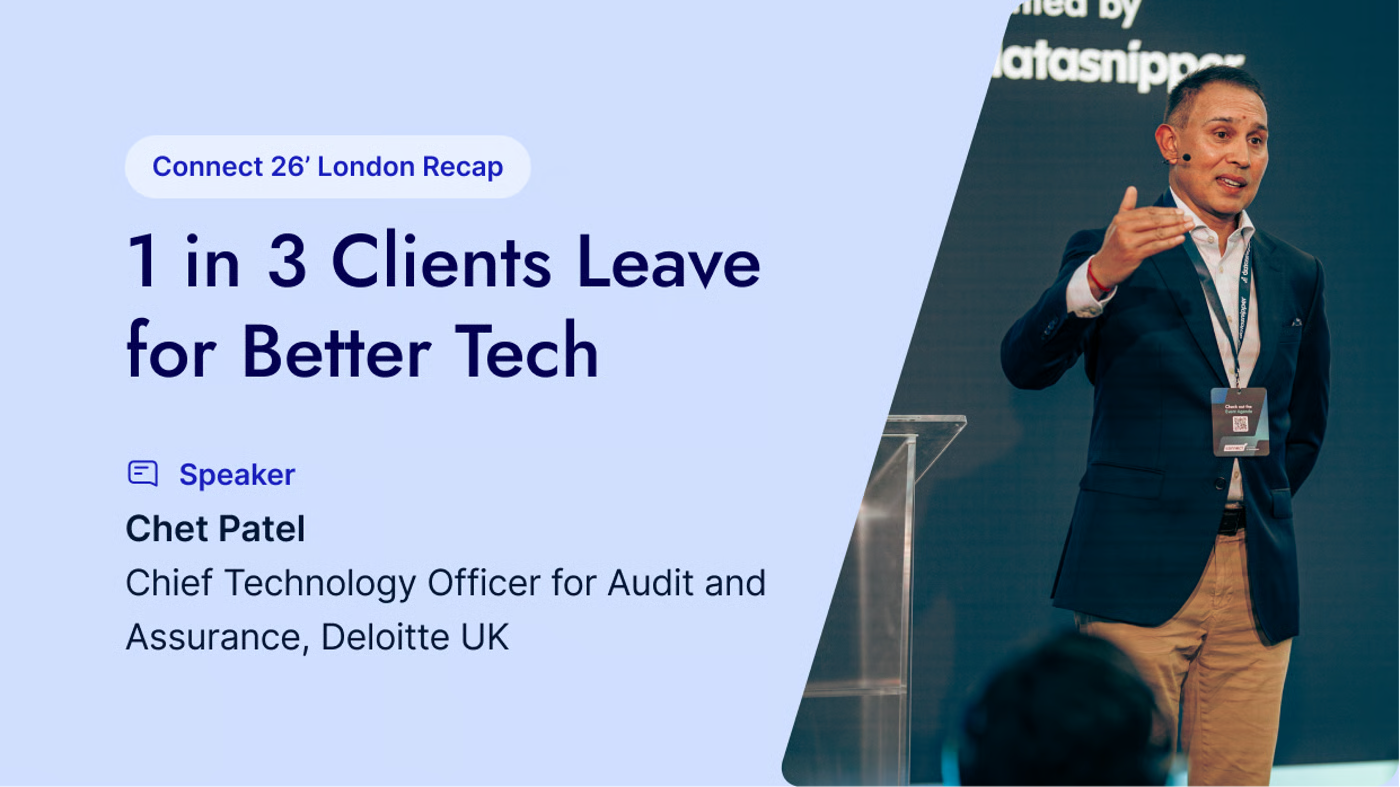
Patel is the Chief Technology Officer for Audit and Assurance, North and South Europe at Deloitte UK - a role he has held since 2019, and one most audit firms still do not have. That absence, he argued, is now showing up in the numbers. More than 30% of clients say they are likely to switch auditors for a better technology proposition.
His case: the CTO is not the CIO. The CIO runs internal operations. The CTO owns the client-facing technological future of the firm. Most firms have invested in one and almost nothing in the other. Here is what he laid out.
The four pressures audit firms are managing right now
Data volume has outpaced capacity
Trust in institutions is eroding
Regulation is getting more complex
Compliance with ISQM1 and QC1000 across multiple jurisdictions is a moving target. Cyber threats are rising. Laws governing data, AI systems, and cross-border operations are changing faster than most firms can track.
Technology is now the delivery mechanism for audit quality
This is the part that shifts everything else. Data analytics in audit now makes full-population testing possible, practically over theoretically. AI and automation can run continuous monitoring across entire transaction populations rather than samples.
But that only improves quality if auditors have the analytical capabilities to work with the outputs responsibly, and if the firm has governance in place to ensure the technology is being used correctly.
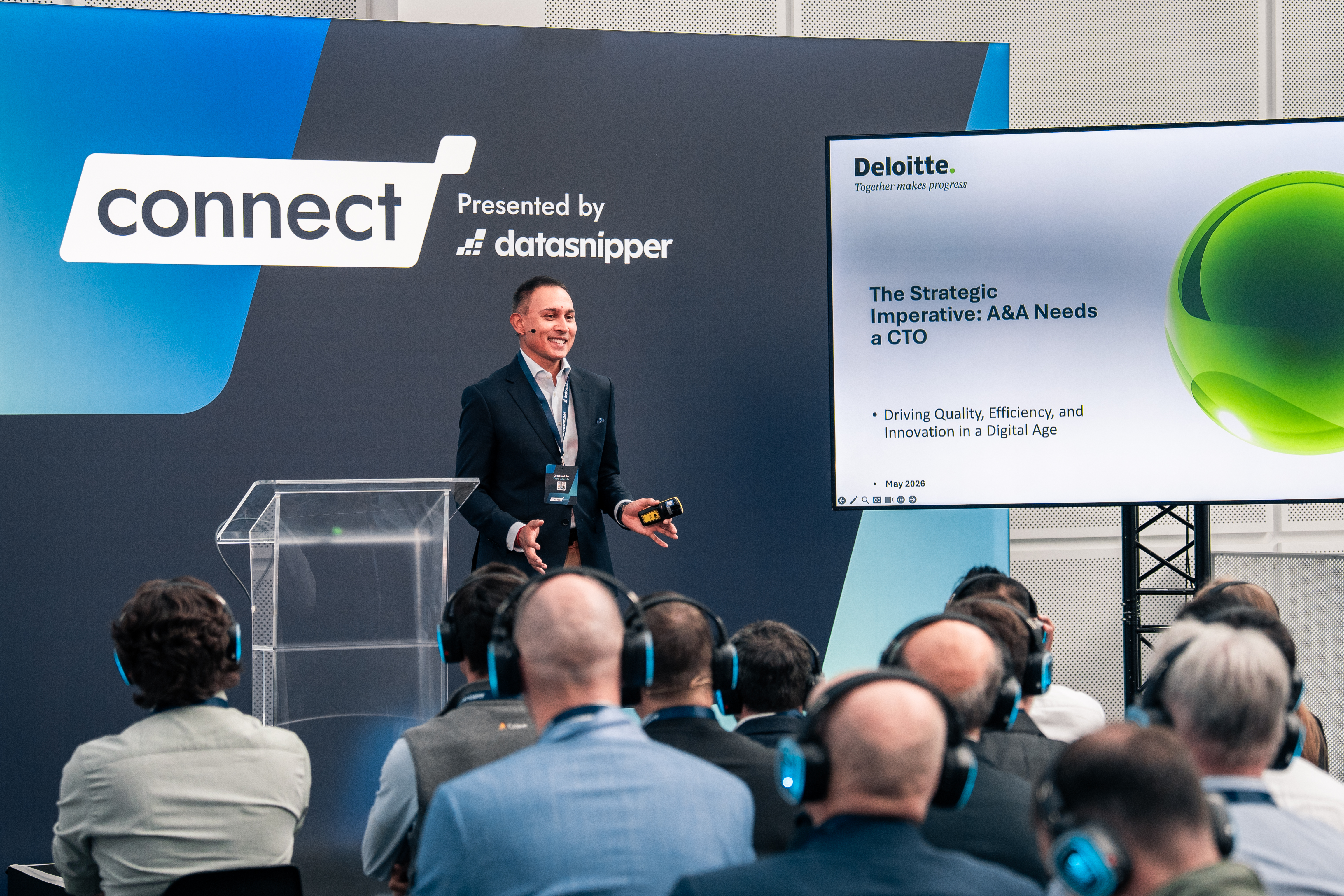
Chet Patel speaking at his session at Connect '26 London
Why audit and assurance needs its own CTO
Patel laid out distinct drivers, each of which maps to a real gap that existed before the role was created.
- Operational efficiency. Partners across geographies were working with inconsistent technology. Different tools, different support arrangements, different cost structures. That inconsistency wasn't just inefficient. It was creating quality risk.
- Audit quality. The business needed a dedicated owner for audit analytics capabilities and AI tools, someone accountable for ensuring technology contributed to earlier risk identification, not just faster processing.
- Strategic clarity. Without someone with genuine technology expertise in the room during strategy conversations, technology decisions got made by people who didn't fully understand the tradeoffs or got deferred entirely. The CTO role gives the firm a technology voice at the leadership level, with accountability for the roadmap and governance.
- Risk mitigation. Technology risk in a professional services firm is not just IT risk. It includes regulatory exposure, data protection obligations, and the question of whether the firm is in a defensible position if something goes wrong with an AI-assisted process. Someone needs to own that question.
- Innovation. Patel described the need for someone who could create an environment where it is safe to fail fast. That phrase carries real weight in audit, a profession that does not traditionally tolerate failure. Building a culture where experimentation is possible without compromising client quality is a specific leadership challenge, not a slogan.
- Talent and competitive positioning. 75% of audit partners are expected to retire within the next decade, while entry-level recruitment into the profession is declining. Firms competing for the next generation of auditors need to offer more than a career path. They need a technology environment that makes the work interesting. The CTO role is part of building that.
CTO vs. CIO: The difference
The CTO for audit and assurance is not the firm's CIO. The CIO owns internal operations and infrastructure. The CTO is focused on client-facing technology, internal audit data analytics capabilities, and the firm's competitive position in the market.
Think of your firm as a restaurant. The CIO is the facilities manager. They keep the lights on, the plumbing is working, the ovens are functioning, etc. They are essential, but oftentimes, not seen for their behind the scenes work. The CTO on the other hand, is the head chef. They decide what’s on the menu, how it’s made and whether clients come back. Both are needed in the restaurant but have different areas.
In practice, that means eight things:
- Understanding the business strategy well enough that every technology decision connects to what matters to clients and partners.
- Establishing robust technology governance with a genuine seat at the leadership table.
- Building relationships and trust across the firm. The CTO role only works if partners and business leaders believe that collaboration with technology delivers results. That credibility is earned continuously, not assumed.
- Building and mentoring technical teams oriented toward delivering value, not maintaining systems.
- Understanding the cost of technology services, including the shift away from billable hours as the dominant commercial model.
- Working with business leaders on investment planning, identifying where technology spend will have measurable impact.
- Understanding data protection obligations across every jurisdiction the firm operates in and being able to answer the defensibility question at any point.
- Managing external technology vendors strategically, aligning them to firm goals rather than procurement terms.
What this means for the audit and finance profession
Patel closed with a broader argument. The CTO role at the practice level is a structural response to conditions that now affect every firm competing for clients and talent.
The question for firm leaders is not whether to invest in technology. Most already are. The question is whether those investments are governed, directed, and held accountable by someone who understands both the technology and the audit practice well enough to connect them.
Patel's answer, based on Deloitte's experience: the firms that figure this out earliest will have a structural advantage that is difficult for others to close.
Connect ’26 continues in New York.
If Patel’s session raised questions you want answered in person about AI governance, audit quality, or what the next generation of audit leadership looks like New York is where those conversations continue.
.svg?width=600&quality=70&format=auto&crop=16%3A9)
.png?width=600&quality=70&format=auto&crop=16%3A9)
.png?width=600&quality=70&format=auto&crop=16%3A9)